| Обновлено 2020-04-17 06:27:55 |
|
Металлорежущий инструмент и инструментальная оснастка для станков / Cutting tools and tooling system WIDIA | Каталог WIDIA 2011 Инструментальная оснастка (Всего 1190 стр.) |
|||||
1100 Каталог WIDIA 2011 Инструментальная оснастка для металлорежущих станков Стр.K64 |
|||||
Каталог WIDIA 2011 Инструментальная оснастка Стр. K64 1100 ENG Lab2u Technical Information Technical Information HPMC System WIDIA The HPMC (High-Performance Milling Chuck) System Application The HPMC System is ideal for holding round shank cutting tools and extensions on various applications because it offers greater versatility. This makes it an excellent choice for end mills, reamers, indexable cutters, drills, straight shank extensions, and boring systems. The HPMC System, with its powerful gripping torque, provides the maximum performance for tough roughing and high metal removal applications, as well as delivering first-rate accuracy for finishing applications all with the same chuck. These toolholders are through-coolant capable with the use of supplied backup screws. Threaded holes in the chucks accept set screws for fine balancing, and reducing sleeves allow the same holder to be converted for smaller gripping sizes. Design The HPMC System is comprised of an inner chuck body, a needle roller bearing assembly, and a thick-walled outer locknut. The inner chuck body, with radial and axial grooves at the inside bore, acts as a master collet by compressing around the cutting tool, exerting a very strong grip. The chuck bore is compressed by roller bearings as they track up a taper of approximately 4°. The roller bearings are held in a retainer (four per window to maximize contact) at an angle slightly skewed from that of the chuck taper angle. The locknut bearing retainer’s wall thickness is greater than that of the chuck body nose. Therefore, as the locknut is rotated clockwise, the roller bearings track in a helical movement, gradually climbing the shallow taper. There are no threads in the HPMC System. As the two tapers are forced together, a tremendously high, uniform force is created. This squeezes the chuck body inward, conforming it to the cutting tool shank. Radial grooves assist the internal diameter by evenly collapsing inward, which improves gripping torque, accuracy, and prevents fretting. Force continues to be applied until the locknut’s back face bottoms out on the chuck’s body face. This is the maximum gripping torque position. Oil residue left on cutting tool shanks can cause slippage, but axial grooves minimize this by draining contaminants. Shallow contact angles produce a self-locking effect, so the chuck will not release during operation. Because of this strong grip, no torque wrench is required. Also, the high gripping force of the HPMC enhances its ability to transmit energy to the machine tool, so vibration, deflection, and runout are minimized. The cutting tool shank offers an advantage over collet chucks because there is no axial drawback as the locknut is tightened. A single toolholder provides 5-10% more gripping torque for heavy milling, and the same chuck is versatile enough to do finishing work, too. To get the maximum accuracy out of the HPMC System, tighten the locknut to the face stop and then back off half a turn. As this is done, be sure the O-ring on the back face of the locknut stays in contact with the chuck face. Stop screws are included with all HPMC Systems for length adjustment or coolant feed. These screws are designed with a cone face and reversible flat face and an O-ring for coolant sealing options. HPMC Systems are subjected to sub-zero treatment to stabilize the material and prevent pitting on the bearing contact surface. This helps to ensure long, worry-free tool life. (continued) K64 WIDIA |
|||||
См.также / See also : |
|||||
Расчет режимов резания при токарной обработке / Turning formulas |
Расчет режимов резания при сверлении / Formulas for drilling |
||||
Аналоги сталей Таблицы / Workpiece material conversion table |
Расчет режимов резания при фрезеровании / Milling formulas |
||||
Группы конструкционных материалов / Workpiece material groups |
Удельная сила резания / Specific cutting force |
||||
Техника безопасности при работе с инструментом / Metal cutting safety |
Производительность режущего инструмента / Machining economy |
||||
| |
|||||
| WIDIA | |||||
| |
|||||
 Каталог WIDIA 2017 Металлорежущий инструмент (англ.яз. / ENG) (1972 страницы) |
|||||
 Каталог WIDIA 2018 Инструмент для металлообработки Новинки (106 страниц) |
 Каталог WIDIA 2017 Инструмент токарный для станков (668 страниц) |
 Каталог WIDIA 2017 Инструмент фрезерный монолитный (332 страницы) |
 Каталог WIDIA 2017 Инструмент для обработки отверстий (348 страниц) |
 Каталог WIDIA 2017 Фрезы резьбовые и метчики (122 страницы) |
|
 Каталог WIDIA 2016 Фрезы с режущими сменными пластинами (340 страниц) |
 Каталог WIDIA 2015 Токарный инструмент (382 страницы) |
 Каталог WIDIA 2014 Новый инструмент (422 страницы) |
 Каталог WIDIA 2012 Новый режущий инструмент и оснастка (470 страниц) |
 Каталог WIDIA 2011 Инструментальная оснастка (англ.яз. / ENG) (1190 страниц) |
 Каталог WIDIA 2010 Режущий осевой инструмент (614 страниц) |
| |
|||||
|
Каталоги инструмента и оснастки для металлообработки на станках / Cutting tools and tooling system catalogs |
|||||
| Каталог WIDIA 2011 Инструментальная оснастка (Всего 1190 стр.) | |||||
| |
|||||
 1097 1097 |  1098 1098 |  1099 1099 | 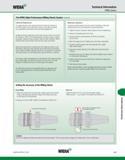 1101 1101 |  1102 1102 |  1103 1103 |
|
Lab2U | Catalogs | Tap drill sizes | Speed to RPM | Material table Разработчики сайта / Developers of site |
|
Поиск на сайте Lab2u.ru с помощью поисковых систем ЯНДЕКС, BING, GOOGLE:
|
||
|
|
||
