| Обновлено 2020-04-14 09:51:02 |
|
Металлорежущий инструмент и инструментальная оснастка / Cutting tools and tooling system KENNAMETAL | Каталог KENNAMETAL 2013 Инструментальная оснастка для станков (Всего 1575 стр.) |
|||||
1490 Каталог KENNAMETAL 2013 Инструментальная оснастка для металлорежущих станков Стр.M90 |
|||||

Каталог KENNAMETAL 2013 Инструментальная оснастка Стр. M90 1490 Lab2u Technical Information Technical Information Tunable Tooling System (TTS) Kennametal Tunable Tooling System (TTS) Overview When machining with extended length setups, undesirable regenerative vibrations (chatter) can arise, causing poor surface finish, dimensional control issues, and tool breakage. To avoid chatter, machine operators are generally forced to reduce cutting parameters, which decreases metal removal rates and diminishes productivity. Cutting force fluctuates when chip thickness varies. This is caused by waves left on the workpiece from the previous pass. These waves may create chatter when the cutting tool and workpiece interact. Continued chatter can further produce variation in cutting force, leading to more vibration. If not addressed, the amplitude of vibration may eventually reach levels that cause the tool to bounce out of the workpiece or even result in catastrophic failure. This problem can be approached in many different ways. Chatter can be avoided by drastically reducing cutting speeds to increase process damping (friction between flank face and workpiece), which dissipates energy to reduce vibrations. Another approach utilizes milling cutters that have inserts with differential spacing. This minimizes the regenerative effect by creating a disturbance on the wave pattern left on the workpiece. However, this approach provides limited success as chip loads are no longer evenly distributed over the cutting edges and may require the feed rate to be restricted. Also, because the spacing is not even, the surface quality could be negatively affected. The problem with these solutions is that they do not allow high metal removal rates to be maintained. To uphold high rates, the dynamic stiffness of the system must be increased. Dynamic stiffness is proportional to the product of static stiffness and damping ratio. Static stiffness can be increased through using shorter setups or larger toolholder diameters. Materials with a higher modulus of elasticity can also increase static stiffness. The Kennametal Tunable Tooling System (TTS) provides a means for maximizing the dynamic stiffness of boring bars and milling adapters by suppressing vibrations with a passive dynamic absorber. TTS is designed with an internal mass that vibrates close to the natural frequency of the most dominant vibration mode in the system. The motion of the internal mass will dissipate energy and prevent chatter. The overall result depends on a machine’s dynamic characteristics and the rigidity of the connection between tool and machine tool. Manufacturing tolerances, preload, and wear may change the dynamic response of a machine and adversely affect overall results. Machines from same builder and model are not dynamically identical. While passive dampening improves the dynamic stiffness of an extended reach tool, the damping mechanism will not perform the same with every machine. Not only does the natural frequency of the tool affect its dynamic stiffness, frequencies inherent to the machine do as well. Because machine tools have their own dynamic signature, a tool that is tuned on one machine may not be tuned on another. Unlike other products on the market that are pretuned, Kennametal tunable boring bars and milling adapters are tunable. They allow users to adjust the passive damper, optimally tuning the tool for a specific machine or setup. This enables extended reach tooling to be retuned to match a machine’s dynamic signature, even as it changes over time. A key benefit of Kennametal’s tunable boring bars and milling adapters is that they can be optimally tuned for any given setup. While Kennametal standard tunable products come pretuned from the factory, it may be beneficial to further optimize them once installed. (continued) M90 Kennametal |
|||||
См.также / See also : |
|||||
Расчет режимов резания при токарной обработке / Turning formulas |
Расчет режимов резания при сверлении / Formulas for drilling |
||||
Аналоги сталей Таблицы / Workpiece material conversion table |
Расчет режимов резания при фрезеровании / Milling formulas |
||||
Группы конструкционных материалов / Workpiece material groups |
Удельная сила резания / Specific cutting force |
||||
Техника безопасности при работе с инструментом / Metal cutting safety |
Производительность режущего инструмента / Machining economy |
||||
| |
|||||
| KENNAMETAL | |||||
| |
|||||
 Каталог KENNAMETAL 2018 Инструмент токарный (988 страниц) |
 Каталог KENNAMETAL 2018 Инструменты вращающиеся для станков (1920 страниц) |
||||
 Каталог KENNAMETAL 2017 Новый режущий инструмент и оснастка (524 страницы) |
 Каталог KENNAMETAL 2016 Новый инструмент и оснастка (324 страницы) |
 Каталог KENNAMETAL 2015 Инновации (260 страниц) |
 Каталог KENNAMETAL 2014 Новый инструмент и оснастка (630 страниц) |
 Каталог KENNAMETAL 2013 Металлорежущий инструмент (2130 страниц) |
 Каталог KENNAMETAL 2013 Инструментальная оснастка для станков (англ.яз / ENG) (1575 страниц) |
 Каталог KENNAMETAL 2007 Системы инструмента (844 страниц) |
 Каталог KENNAMETAL 2004 Режущий инструмент для точения (535 страниц) |
||||
| |
|||||
|
Каталоги инструмента и оснастки для металлообработки на станках / Cutting tools and tooling system catalogs |
|||||
| Каталог KENNAMETAL 2013 Инструментальная оснастка для станков (Всего 1575 стр.) | |||||
| |
|||||
 1487 1487 | 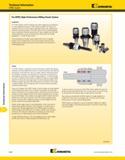 1488 1488 |  1489 1489 | 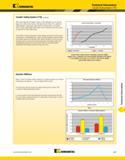 1491 1491 |  1492 1492 | 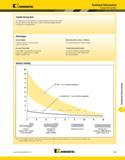 1493 1493 |
|
Lab2U | Catalogs | Tap drill sizes | Speed to RPM | Material table Разработчики сайта / Developers of site |
|
Поиск на сайте Lab2u.ru с помощью поисковых систем ЯНДЕКС, BING, GOOGLE:
|
||
|
|
||
