| Обновлено 2020-04-17 13:13:24 |
|
Металлорежущий инструмент и инструментальная оснастка / Cutting tools and tooling system GUHRING | Каталог GUHRING 2016 Режущий инструмент для обработки резьбы (Всего 878 стр.) |
|||||
807 Каталог GUHRING 2016 Режущий инструмент для обработки наружной и внутренней резьбы Стр.795 |
|||||

Каталог GUHRING 2016 Режущий инструмент для резьбы Стр. 795 0807 Lab2u GENERAL INFORMATION THREAD FORMING Thread production by pressure deformation Fluteless taps are used for the forming of internal threads without chip removal. In contrast to conventional tapping where material is cut from the workpiece, thread forming is a pressure deformation process without chip removal for the production of internal threads. During the process the material is cold formed without interrupting the grain flow. According to DIN 8583, thread forming is described as “pressing the thread into the workpiece with a tool possessing a spiral working area”. The spiral threaded, polygonal portion of the fluteless tap is “screwed” into the pre-drilled workpiece with an appropriate constant feed rate equal to the thread pitch. Hereby the thread profile is pressed gradually via the forming lead into the material of the workpiece so to speak. Subsequently, the pressure in the deformation zone exceeds the compression limit, the workpiece becomes ductile and is deformed. The material yields radially, “flows” along the thread profile in the unoccupied base of the tool and forms the minor diameter of the nut thread. The flow process creates the process specific form pockets (claws). The tapping size hole diameter is heavily dependent on the formability of the material, the workpiece geometry and the required effective depth of the thread. In comparison to conventional tapping, a larger diameter tapping size hole should be selected. With a larger diameter tapping size hole the load on the tool is reduced whilst increasing the tool life. Thanks to the uninterrupted grain flow, the loading capacity of the thread remains sufficient with a 50% effective thread depth. The partially formed crests of the thread with decreasing effective thread depth are a typical characteristic of threads produced by the thread forming process. With the flanks of the thread fully formed, they have no influence on the tensile strength of the thread. If necessary, the required deformation level of the thread should be determinded by performing a test. Lubrication is of significant importance. The lubrication prevents material from building up on the thread flanks and ensures that the necessary torque for the forming process is not too high. Therefore, under no circumstances should there ever be a break-down in lubrication Preference should be given to lubricants such as cooling agents of oils containing graphite such as those used in rolling processes. Always follow the rule: “The better the lubrication the easier the thread forming process ” It offers the following advantages: no chip formation. one tool for the production of threads in through and blind holes. application in wide range of materials. no cutting errors. pitch and angle of thread errors that can occur with thread cutting are eliminated. internal threads produced by thread forming possess a higher tensile strength particularly at the thread flanks thanks to the so-called “uninterrupted grain flow” and the cold forming process. the surface of the thread is improved. fluteless taps can be applied at higher speeds because the formability of many materials increases with the forming speed. This does not have a negative effect on the tool life. reduced danger of breakage through rigid design Process The production of internal threads without chip removal (thread forming) in comparison to conventional tapping Conventional tap cut chamfer thread ead Fluteless tap Flow characteristics of the material during thread forming and the deformation process D = nom.-0 D2 = flank-0 Dk = hole-0 H = profile height P = pitch A = form pocket (claw) finished nut thread fluteless tap GUHRING 795 Technical section |
|||||
См.также / See also : |
|||||
Металлообработка Учебники и справочники / Metal Cutting Technology Technical Guide |
Особенности сверления металла / Drill a hole in metal |
||||
Токарная обработка металла / Basics of metal turning |
Фрезерование на фрезерном станке / Basics of milling |
||||
Нарезание резьбы метчиками / Tapping |
Развертывание отверстий и развертки по металлу / Reaming and reamer cutting tool |
||||
Расточка на токарном станке / Boring on a lathe |
Растачивание отверстий на расточном станке / Boring on a boring machine |
||||
| |
|||||
| GUHRING | |||||
| |
|||||
 Каталог GUHRING 2016 Металлорежущий инструмент Сверла (англ.яз. / ENG) (910 страниц) |
 Каталог GUHRING 2016 Режущий инструмент для обработки резьбы (англ.яз. / ENG) (878 страниц) |
||||
 Каталог GUHRING 2012 Общий Инструмент Оснастка (1669 страниц) |
|||||
 Каталог GUHRING 2012 Инструментальная оснастка (216 страниц) |
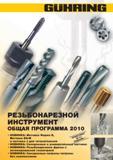 Каталог GUHRING 2010 Металлорежущий резьбовой инструмент (492 страниц) |
 Каталог GUHRING 2009 Режущий инструмент и оснастка (1482 страницы) |
|||
| |
|||||
|
Каталоги инструмента и оснастки для металлообработки на станках / Cutting tools and tooling system catalogs |
|||||
| Каталог GUHRING 2016 Режущий инструмент для обработки резьбы (Всего 878 стр.) | |||||
| |
|||||
 804 804 |  805 805 |  806 806 |  808 808 |  809 809 |  810 810 |
|
Lab2U | Catalogs | Tap drill sizes | Speed to RPM | Material table Разработчики сайта / Developers of site |
|
Поиск на сайте Lab2u.ru с помощью поисковых систем ЯНДЕКС, BING, GOOGLE:
|
||
|
|
||
